Gravel, Brick or Stepping Stones for a Garden Path?
Compare gravel, brick, and stepping stones for a garden path by their visual character and walking rhythm, then choose a surface that suits its setting.
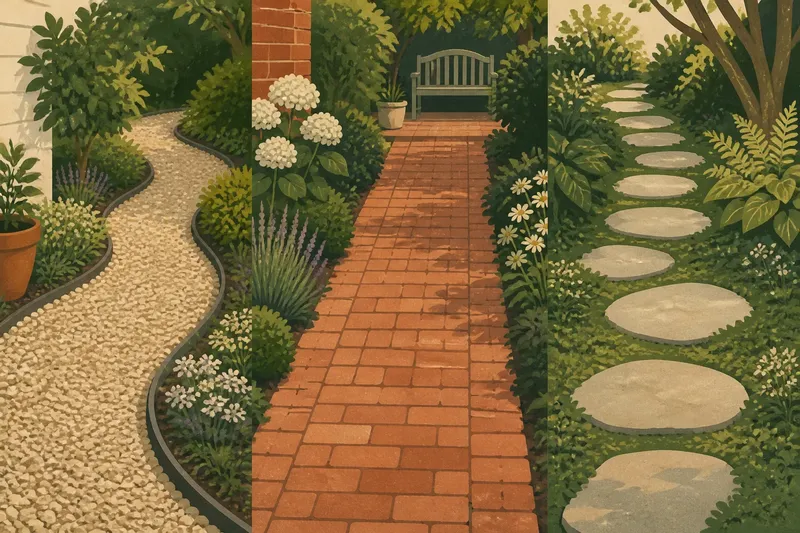
Gravel, brick, or stepping stones make a garden path feel different before you reach its end. Gravel shifts softly underfoot, brick draws a steady line, and separated stones ask you to place each step. The right choice depends less on a universal ranking than on the mood and pace you want the route to create.
Gravel makes the route feel loose and responsive
A gravel path has a granular surface that catches light in small, changing flecks. Pale stone can brighten a shaded passage; darker gravel tends to sit quietly among foliage. The material also makes a broad, informal route feel natural, especially where its edge meets planting without a hard border.
Walking on gravel involves a little give and a soft crunch. That sound makes movement noticeable, while the uneven texture slows the stride without demanding a deliberate hop from one foothold to another. It suits a path that invites wandering or links garden areas without turning the walk into a formal procession.
Gravel can stray into nearby beds, and leaves may settle among the stones. A clean edge, such as a row of bricks or a simple metal edging strip, gives the surface a clear boundary. Think about the path’s surroundings, too: loose gravel may be awkward beside a door that sees frequent sweeping or where a smooth approach matters.
Choose gravel when you want a path to blend into the garden rather than announce itself.
Brick gives a path a measured beat
Brick brings a recognizable pattern and a warm, solid color. Laid in a running bond, it suggests forward movement; a basket-weave arrangement feels more settled and decorative. Even a narrow strip can make a route read as intentional because the repeated joints give the eye a regular rhythm.
The walking sensation is firmer and more even than gravel. Brick can encourage a steady pace, making it a natural fit for a direct connection between the house and a seating area. Its color can echo a brick wall or stand apart from green planting, so consider nearby materials before choosing a strong red or a muted, weathered tone.
Brick’s formality can be useful, but a long, straight run may feel rigid in a loose, leafy garden. A gentle curve or a small change in direction can soften that impression. The joints also become part of the visual surface, so decide whether you want them to read as a crisp grid or a quieter background.
Pick brick when the route should feel composed and easy to read at a glance.
Stepping stones turn walking into a sequence
Stepping stones make gaps part of the design. Each stone becomes a pause in a line of grass, gravel, or low groundcover. That spacing sets the pace: close placements feel brisk and continuous, while generous gaps invite a slower, more attentive walk.
Stone shape changes the character. Rectangular slabs tend to look ordered; irregular pieces feel more casual. A repeated shape gives the eye a clear pattern, while varied outlines can make a path seem to emerge from the ground. The spaces between stones matter as much as their surfaces, since they frame the planting and keep the route visually open.
This option asks walkers to notice their footing more than a continuous path does. It can be charming on a garden stroll, but less suitable where someone needs an uninterrupted, even route. Consider how the stones will read from the spots where people usually look toward the garden, not only from directly above.
Use stepping stones when you want the journey itself to feel deliberate.
How do the surfaces change a garden walk?
Which surface makes a path feel most informal?
Gravel usually reads as the loosest option because its small pieces soften the boundary between path and planting. Stepping stones can also feel informal when their shapes and spacing vary, though their separate placements make the route more noticeable.
Which surface makes a route easiest to follow visually?
Brick often gives the clearest continuous line, especially when its pattern runs in the direction of travel. Gravel can also mark a route clearly if its edges contrast with the beds beside it.
What should I consider for a path used every day?
Notice how the surface feels underfoot, how clearly it connects the places you use, and whether its edges are easy to keep distinct from planting. A frequently used route may call for a more continuous, even-feeling surface than a path meant for occasional wandering.
Can these materials work together?
Yes, if each material has a clear role rather than competing for attention. For example, brick can define the main approach while gravel marks a quieter branch, or stones can cross a gravel section as visible footholds.
Let the route’s purpose set the mood
Say you have a narrow route from a back door to a small table among shrubs. If you want that trip to feel quick and settled, imagine using a simple brick line; if you want a softer transition into the planting, imagine gravel; if the walk should feel like a small garden excursion, imagine stepping stones with green spaces between them. In each imagined version, notice whether the surface’s sound, pattern, and pace fit the destination.
It can help to place a few sample bricks or stones on the ground, or scatter a small patch of gravel where the path might go. View the arrangement from the doorway and walk beside it. These temporary arrangements let you judge scale and visual weight without treating a material choice as a promise that one style will suit every garden.
Also consider what the path frames. A straight brick line can lead the eye toward a bench; a loose gravel curve can conceal part of the route; stepping stones can make nearby leaves and groundcover part of the walk’s pattern. The surface is not only something to walk on. It directs attention through the garden.
For a garden path, choose the material whose walking rhythm matches the reason for going there. Gravel relaxes the pace, brick steadies it, and stepping stones make each footfall part of the experience.